
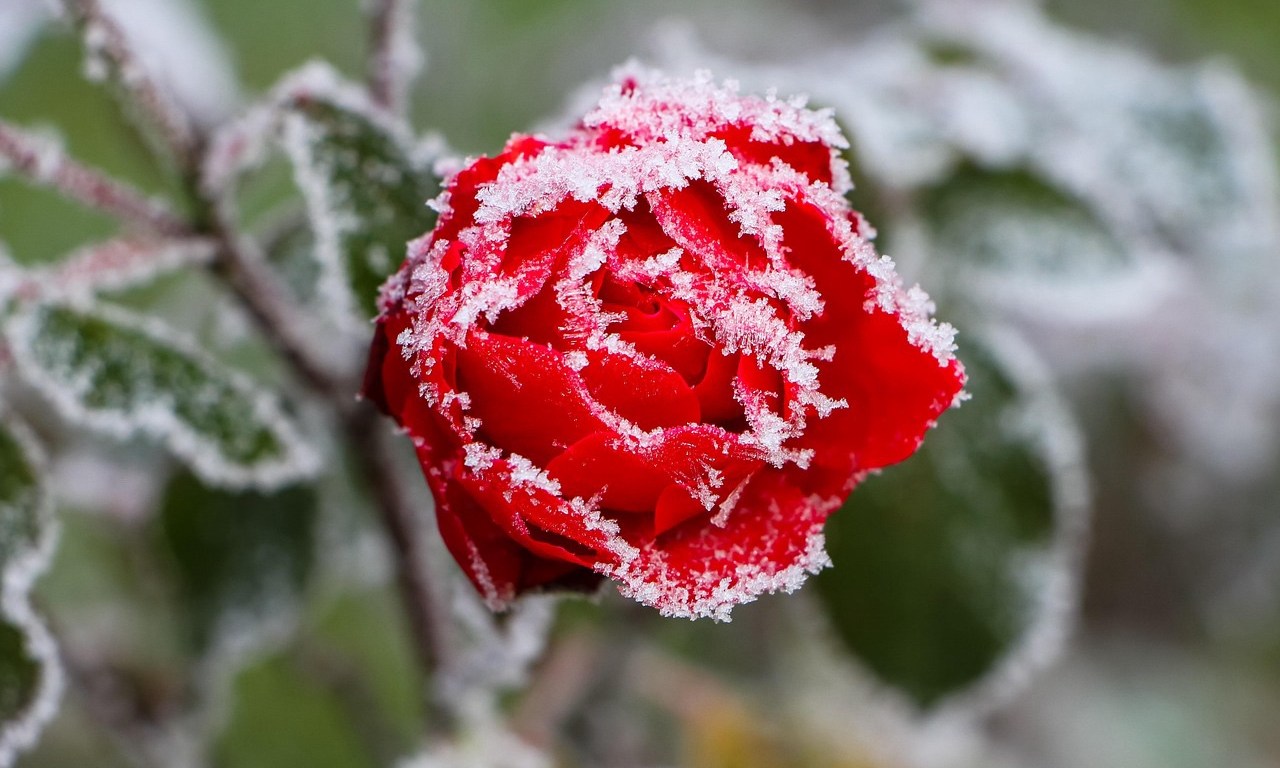
by Jason Telese
Every now and again, we must be reminded of the cold. We spend our days lit so bright and hot, fed so full, that we peel off our layers and sit, pleased as punch, perspiring, complaining of our suffocation. Of course, this suffocation is of our own design; it is a mindset to which the comfortable fall victim. If, in this world, there were no suffering, there could be no true understanding of comfort.
As a poor man from a poor home, I have lived all my life a breeze’s length from the cold. It has, on certain days, reached out and scraped at my ribs, seeking passage to my heart. In this form, it is a leak in the family car roof that drips steady on my right leg. It is a gift-less holiday, an armoire of second-hand clothes, a paltry pantry made of canned beans and boxed pastas. At this distance, the cold can be warded off: one can wrap themselves in a blanket, fill their belly with tea, and pay no mind to its looming chill. I have survived beneath this blanket, full of this tea, but just days ago, the cold permeated this wooly shell and got to me—to us all.
My sister and her partner had been planning to visit us for some time now. They were driving up from Alabama—where my sister studied medicine and her girlfriend marine biology—and would make an extended stay of the third weekend of November, the one just before Thanksgiving. This was to be the first time my parents and I met her girlfriend, and just as well, the first time we’d see my sister, Rebecca, since last December.
As fate would have it, on this very weekend (which had been the topic of seemingly endless planning and discussion over the past several months), a winter storm appeared and was predicted to touch down in the northeast on Thursday, the day on which my sister was to begin start up the east coast to home. Just as well, Thursday was the day I was to return home from college for the weekend: I missed my sister dearly and would not forgo the opportunity to see her nor meet the woman who, in what I gathered over the telephone, she intended to marry.
The drive from the city to our wooded home was a dreary, rainy one. My mother stank of worry. She was fearful of road conditions and closures that might impede my sister from reaching us (a valid concern but, in my opinion, not a worthwhile cause to devote her limited energy). I tried my hardest to quell her worries, but it was never going to work; no matter how thick the blanket or strong the tea, my mother always felt the cold more than my father and me.
In her youth, my mother had been a wealthy, Great Neck Jew, her father and mother a businessman and jewelry store owner respectively. In her early adulthood, her father (my grandfather) had succumbed to his gambling addiction, and robbed her mother’s (my grandmother’s) jewelry store to pay off his gambling debts and, without a shred of doubt in my mind, incur a few new ones. Their cozy rug was ripped from beneath them, with it their home, their life. My mother had forgone college to be with my father, a punk from Queens who was too pre-occupied with following the party to think about what he might do when it inevitably ended. When her father went to jail, my mother met the cold face-to-face. She knew the cold and its capabilities better than we did—not because she had been steeped in it, but rather because she had once truly, fully, and ignorantly lived in warmth.
That Thursday evening at home was like any other of the countless nights on which I’ve returned during my lengthy tenure as a college student: there was catch-upping and eating and a general sense of excitement of the weekend to follow. I spent my night trying on the clothes I’d left in my closet and planning how I would go about cleaning the house in preparation for the girls’ arrival the following late afternoon. At ten o’clock, the whole house fell under the night’s spell and I, anticipating a long day of house duties, fell with it.
At about two o’clock in the morning, I awoke to the sound of my grandmother’s voice, ringing through the house like a frigid bell. She was singing in Yiddish. An unfortunate side effect of her worsening Dementia, if left alone, she begins to converse (and often argue) with figures which she imagines, hallucinates, or maybe are genuine phantoms and ghosts that float in and out of her room at every hour of the day. When I sat up, the small kitchen light—which is left on every night and casts a faint glow up to the loft ceiling beneath which I sleep—was out, and the switch to turn on the overhead light did nothing when thrown. My mother shuffled out of bed and into my grandmother’s room in an ultimately fruitless attempt to hush her, but everyone in the house was now awake, and in each of our backs, a chill was beginning to settle.
After calming my grandmother, my mother paced the kitchen, her back straight, holding her stomach in that way she does when she gets so anxious she becomes nauseous. My father, in only his underwear, stared out the back window into the blackness, as if he could see perfectly how bad the weather had become. I looked down at them from the loft like a child staring at an anthill which he’s just savagely crushed. They moved around frantically in the pitch darkness and cried back and forth at each other about the heat and my sister’s arrival, and my grandmother and I—despite being in the eye of this ever-growing storm—felt only an odd sense of responsibility, like I was to blame for these unfortunate happenings and, as such, obligated to solve them.
As my mother worried aloud about getting in contact with my sister, and just when the whole weekend felt like it had come crashing down, a dense crack echoed out into the wintry night, followed by a half-ton thud against the side of our house. My mother gagged. My father, wearing only rubber sandals and a coat, went out to the mudroom to see if he could, from inside, spot what had just come down. This kind of behavior and level of problem solving is typical of him. My father is as close to Anse Bundren as a living, breathing, modern man can get, and would, like Anse, likely die if he broke a sweat. He was an only child of divorce, born to an alcoholic father and an apathetic mother who spent most of his childhood more interested in her boyfriends than her son. By no means did he come from the warmth which my mother did, but everyone in his life has bent to his will, his every beck and call, and taken complete care of him. This is his warmth, but it’s spoiled him rotten. Now, at fifty-seven, he remains as unable to care for himself as he did in childhood.
I slipped into a pair of snow boots and, flashlight in hand, pushed past my dad and out into the night. Lying across the back deck, broken in shards, was a tree fifteen feet in length and a foot in diameter. It had, as I understand it, fallen on the aluminum roof of our shed and bounced away from the house. Had it angled just a few feet to its right, the tree would’ve gone crashing through the roof of my loft and perhaps down into my parents’ room. I called over to my dad that it was a tree but that it had missed us. He, still in sandals, rushed out to see the wreckage and, as if penned into the action of the night by a cosmic playwright with a great sense of humor, immediately slipped and fell on the icy ground, leaving him with a limp for the rest of the weekend.
After inspecting the tree, we returned back inside and assured my mother that our home was still intact. Now, three o’clock, there was nothing left to do but to return to our beds and hope that power would be restored by morning.
It wasn’t. Instead, I awoke to a home which had been invaded by the cold and was, with each passing moment, growing colder. There was no electricity, no heat, no bandwidth, no road access, no food, no water—nothing. I spent the day moving about the house like a ghost – very slowly and draped in multiple robes and jackets that hung off me like sheets do off a cartoon phantom. Because of my father’s surprise knee injury, I was, of course, stuck shoveling the entirety of the driveway and walking paths, as well as moving the fallen boughs, by myself. After two hours of bitterly digging out our car and cursing my father’s name, arguing with an uncharacteristically standoffish version of himself in my head which would make my vitriol appear warranted, I returned inside to a house with a temperature that was nearly indistinguishable from the one just beyond the door. Unable to shower myself off after a few hours of labor, I simply cleaned myself with a few Clorox wipes, dressed myself once again in multiple jackets, and got back into bed.
Of the thirteen hours I wasted in bed that day, the majority were spent thinking about the situation I found myself and my family in. It was, despite a lifetime of poverty, the closest I had ever truly felt to being in danger because of my living circumstances. Yes, there were times that food choices were scant, times in winter that we had to stay home from school because our car, aging and on balded tires, couldn’t make it out of the driveway, and even a time that the roof above our dining room caved in after years of rot, but despite all those deep inconveniences, we were still safe and alive. This was the first time that I did not feel completely safe.
My grandmother, if not bundled in blankets properly, could have rightly passed away during our bout with the cold. My parents, both two years from sixty, are in declining health (and levels of sanity). With no way to leave, no method to contact anyone, and a fleeting supply of food and water, I felt as though the cold had finally reached us, and as each hour went by without power, I thought more and more that what had occurred was a swarm of all the Telese family’s dodged bullets of years past stopping mid-air, spinning one hundred eighty degrees, and heading back at us with a vengeance.
I know now, a week-or-so separated from this incident, that this is an unhealthy way to view bad things which happen. But when pressed down under the weight of my circumstances, I have a nasty habit of believing them to be my fault, even if nobody is to blame (I should clarify that, in my saying this, I don’t intend to portray myself as a martyr, but rather as delusional, which feels like a much more appropriate and acceptable title to assign oneself).
The universe is irrational. It acts without logic, without plan, without purpose. Things simply just happen. All my life, I have believed my brief and distant experiences with the cold of the world were warranted or, at the very least, connected to my circumstances and actions (or the circumstances and actions of my family dating back generations). It is now clear to me that nothing we could have done could have prevented our experience with the cold on that November weekend. Nearly fifty thousand people were left, in my area, without power, snowed-in and stranded off the glacial backroads just as my family had been. This knowledge brought me great comfort. It was, in a way, the closest I had felt to people whose cars always ran and whose food was always bountiful and whose clothes were always new: we were all cold.
The warmth that we experience in our lives is taken for granted, treated as a birthright rather than the gift that it is. The universe, in its infinite stupidity, could easily and without any premeditated thought, violently and mercilessly kill you and your family. And it would be nobody’s fault. Humans make choices, every day, to pursue comfort and act in a way which keeps them in the warmth: that life beneath the blanket with a belly full of tea. This pursuit of comfort—of the warmth—is perhaps one made in vain and is nothing more than a futile attempt to exert control in a world which is uncontrollable—a world which might, at any second, thrust you right into the cold.
 Artium